
Missing teeth can affect the look of your smile as well as your ability to eat and speak. Dental implants offer a permanent solution for replacing missing teeth, providing stability and function that closely mimics natural teeth. Unlike dentures or bridges, implants integrate with your jawbone to create a secure foundation for replacement teeth; this restoration option offers several advantages for those seeking to restore their smile and oral health.
Understanding Dental Implants
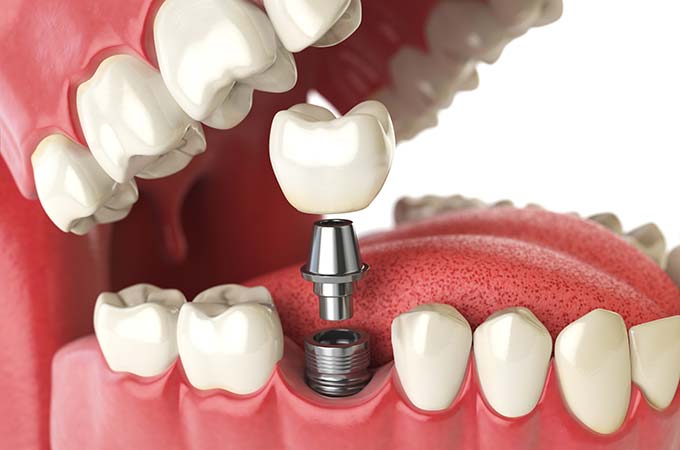
Dental implants are titanium posts. A dental surgeon places them into the jawbone to serve as artificial tooth roots. The implant fuses with the bone through a process called osseointegration; the entire process typically takes several months. Once the implant has integrated with the jawbone, a dental provider attaches an abutment to connect the implant to a custom-made crown.
The process for receiving implants usually involves multiple appointments:
- Initial consultation and treatment planning
- Surgical placement of the implant post
- Placement of the abutment and crown
Some patients may need bone grafting before implant placement if their jawbone lacks sufficient density. Recovery time varies based on individual healing factors and the complexity of the procedure.
Enhancing Aesthetic Appearance
Implants restore the natural appearance of your smile. The custom crowns placed on implants are designed to match the color and shape of your surrounding teeth, and they can match the size as well. Because implants stimulate nerves in the jaw, they stop bone loss and help maintain facial structure over time.
These dental restorations look and function much like natural teeth, and they require similar maintenance to natural teeth as well. Unlike bridges or other similar restorations, implants require no specialized tools for brushing and flossing. Use a soft-bristled brush to brush your teeth like before. Regular flossing is another method that keeps bacteria and buildup from forming around your teeth and implants.
Improving Eating Function
Dental implants allow you to eat in the same way as natural teeth. Because they anchor securely to the jawbone, implants provide a stable chewing surface that doesn’t slip or move. You can bite into apples, and you can also eat corn on the cob with implants.
The stability of implants means you don’t need to avoid certain foods or worry about your teeth shifting while eating. This freedom extends to both hard and sticky foods. Denture wearers must avoid many foods that could dislodge or damage their prosthetics, but implant recipients face no such restrictions.
Clarifying Speech Patterns
Missing teeth or ill-fitting dentures can affect your ability to speak clearly. Gaps in your smile alter the way air flows through your mouth when forming certain sounds. Dentures can slip during conversation, and they can cause slurring or clicking sounds.
These restorations eliminate these speech difficulties by providing stable, properly positioned replacement teeth. The crowns attached to implants function like natural teeth when you speak. You can pronounce words clearly, and you may worry less about prosthetics moving or falling out.
Learn More About Dental Implants
Dental implants provide lasting solutions for missing teeth through secure anchoring, natural appearance, and full functionality. They enhance your smile, and they allow you to eat and speak without concern. The preservation of jawbone density protects your facial structure and overall oral health for years to come. If you want to learn more about the benefits of dental implants for replacing missing teeth, consult a dental provider near you.