
Plantar fasciitis treatment now includes new options to address pain, improve function, and support longer-term healing. Effective treatment combines symptom relief with targeted correction of contributing causes. Here is an overview of innovative approaches for treating plantar fasciitis:
Identifying the Cause
A podiatrist examines your foot for structure, motion, and pain location, and they check weight distribution and plantar fascia tenderness. Diagnostic imaging may be used to rule out other conditions that cause heel pain; X-rays can reveal bone spurs or stress fractures, while ultrasound or MRI provides detailed images of soft tissue damage. These tools help differentiate plantar fasciitis from conditions such as heel spurs, Achilles tendonitis, or neuromas.
Exploring Non-Surgical Therapies
Modern plantar fasciitis treatment includes several non-surgical therapies; they address inflammation and promote tissue healing. Physical therapy focuses on stretching exercises that target the plantar fascia and Achilles tendon. These exercises help improve flexibility and reduce tension in the affected tissue. A physical therapist may also recommend strengthening exercises to support the arch and stabilize the foot during movement.
Shockwave therapy delivers acoustic waves to the affected area, stimulating blood flow and promoting tissue regeneration. This treatment has shown positive results in cases of chronic plantar fasciitis that don’t respond to conventional therapies. Corticosteroid injections may reduce inflammation and provide temporary pain relief; providers generally reserve them for severe cases because of potential side effects.
Incorporating Supportive Devices
Several supportive devices can provide relief and prevent further strain on the plantar fascia. Here are some of them:
- Custom orthotics: These inserts fit inside shoes and provide extra arch support and cushioning; a podiatrist designs custom orthotics based on the specific structure of your foot.
- Night splints: These devices hold the foot in a flexed position during sleep, maintaining a gentle stretch on the plantar fascia and preventing it from tightening.
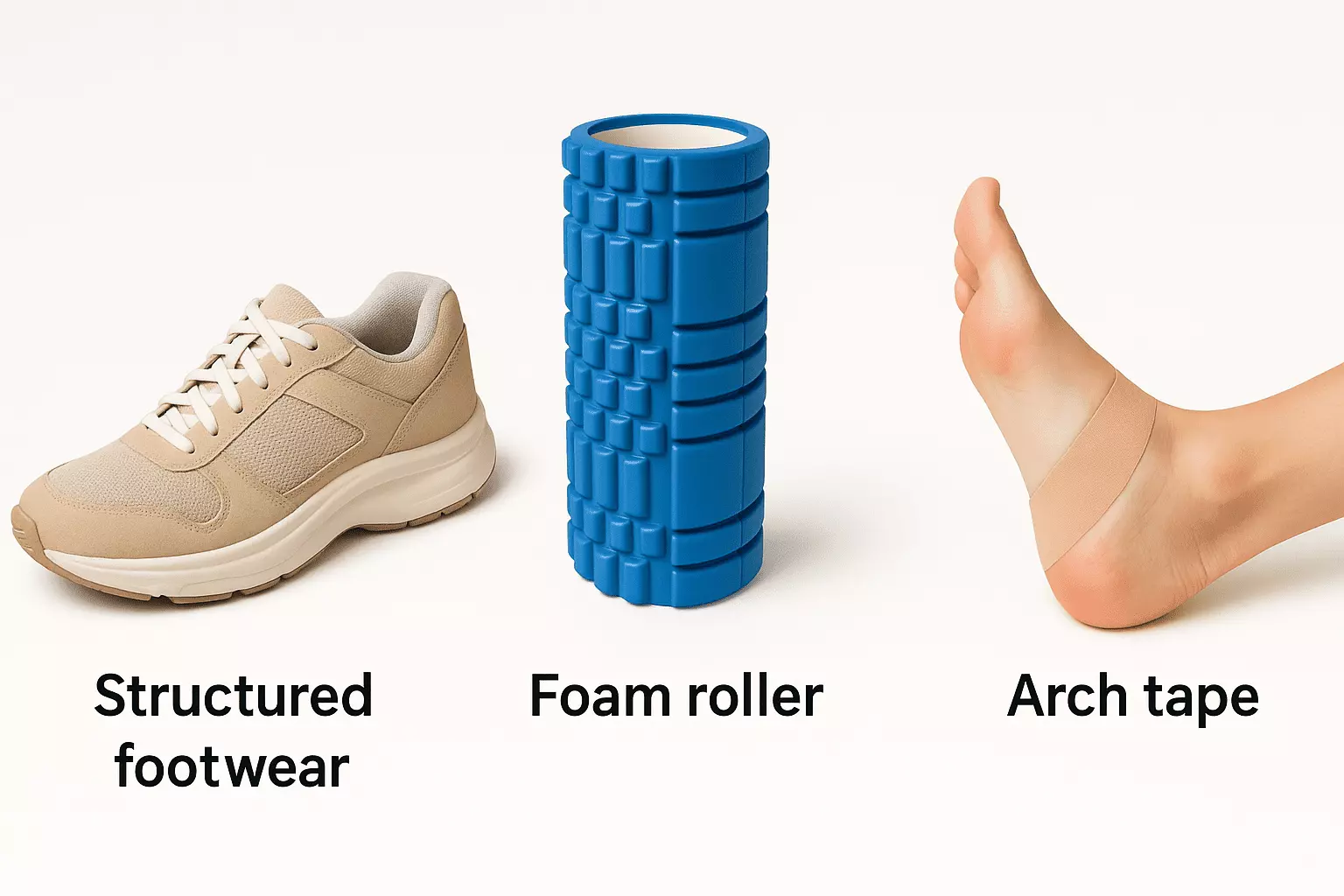
- Athletic tape or strapping: This provides temporary support to the arch and helps reduce stress on the plantar fascia during activity.
- Supportive footwear: Shoes with good arch support, cushioned soles, and proper stability help distribute pressure evenly across the foot.
These devices work best when combined with other treatment approaches and should be selected under the guidance of a podiatry specialist.
Preventing Recurring Pain
A structured return-to-activity plan is key to preventing plantar fasciitis from recurring. Here’s how to gradually reintroduce physical activity while monitoring symptoms:
- Start with low-impact activities: Swimming, cycling, and elliptical training place less stress on the plantar fascia compared to running or jumping.
- Gradually increase duration and intensity: Add more time to your activity each week, and make sure pain doesn’t increase during or after exercise.
- Incorporate proper warm-up and cool-down routines: Stretching before and after activity helps maintain flexibility in the plantar fascia and surrounding muscles.
- Replace worn athletic shoes regularly: Shoes lose cushioning and support over time, which can contribute to the recurrence of plantar fasciitis.
- Cross-train to avoid repetitive stress: Alternating between different types of exercise reduces the risk of overloading the plantar fascia.
Regular follow-up appointments with a podiatrist help track progress and adjust the treatment plan as recovery advances.
Learn More About Plantar Fasciitis Treatment
Accurate diagnosis identifies the root cause of plantar fasciitis, while non-surgical therapies promote healing and reduce inflammation. Supportive devices provide relief during recovery, and structured return-to-activity plans help prevent recurrence. For persistent heel pain, contact a trusted podiatrist near you to schedule your consultation and learn more about plantar fasciitis treatment today.