
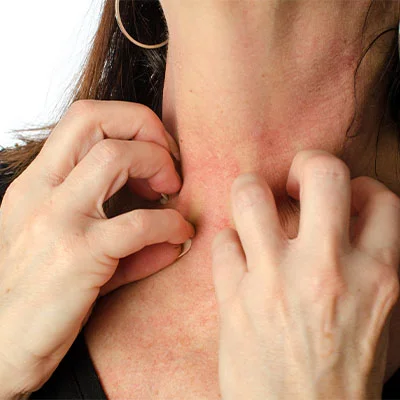
Allergies can trigger immune responses that affect organs beyond the respiratory system, and the skin is a common site where symptoms appear. Allergic reactions can contribute to inflammation and ongoing skin sensitivity, including itching, hives, and flare-ups of chronic conditions such as eczema. Here’s more information on the link between allergies and skin conditions:
Recognizing Allergies on Skin
When an individual with allergies touches, breathes in, or eats an allergen, their antibodies respond immediately. This releases chemicals, such as histamine, into the bloodstream, which cause inflammation and irritation in the skin layers. The skin may develop red patches, raised bumps, or a scaly texture depending on the type of allergen involved.
One common skin manifestation of allergy is urticaria, also known as hives. These are itchy, red welts that appear on the skin’s surface and can rapidly change in size or shape. Hives often occur after a drug allergy or food allergy triggers the system, but they can also result from insect stings.
Another prevalent condition is eczema (atopic dermatitis), which causes the skin to itch, peel, or redden. Eczema is often chronic, meaning it persists over time, and it is frequently associated with environmental allergens such as dust mites or pet dander. The skin becomes inflamed and sensitive, which makes it susceptible to infection if the person scratches the area excessively.
Exploring Common Triggers
Many substances in the environment can cause skin reactions, and these triggers vary significantly from person to person. The following elements are frequent culprits behind allergy-induced skin issues:
- Foods: Certain foods, such as nuts, shellfish, dairy, and eggs, often cause systemic reactions that result in hives, rashes, or swelling of the lips and face.
- Medications: Drug allergies frequently present as skin issues, and antibiotics such as penicillin are common triggers that cause itchy rashes or hives.
- Insect Stings: A sting from a bee or wasp often leads to localized swelling at the site, but it can also trigger widespread hives or flushing across the body.
- Contact Allergens: Substances that come into direct contact with the skin, such as latex, nickel, or chemicals in detergents, can cause contact dermatitis, which results in red, itchy skin.
- Environmental Factors: Airborne particles such as pollen, mold, and pet dander can trigger eczema flare-ups and often exacerbate existing skin conditions during specific seasons.
Identifying the specific trigger is a fundamental step toward preventing future breakouts and discomfort.
Identifying Key Differences
It is sometimes difficult to distinguish between an allergic reaction and other dermatological conditions, such as viral rashes or bacterial infections. An infection may cause fever or body aches, whereas allergic reactions generally present with intense itching and swelling without systemic symptoms. Allergic rashes often appear quickly after exposure to the trigger, whereas infections may develop slowly over several days.
Contact dermatitis is a helpful example of how location aids in diagnosis. If a rash appears only on the wrist, it may be a reaction to a watch strap or nickel-containing jewelry. This localization suggests a contact allergy rather than a systemic issue, which would likely affect broader areas of the body. A medical evaluation is helpful to confirm whether a skin condition is allergy-related or due to another cause. Physicians review the patient’s history and symptoms to distinguish chronic skin diseases from acute allergic reactions.
Book Your Allergies Evaluation Today
Skin conditions are often a visible signal that the body is fighting against allergens. Ignoring these signs can lead to chronic discomfort; it is key to seek professional medical advice to understand the root cause. Contact an allergist specialist near you to book your appointment for an allergy evaluation today.