
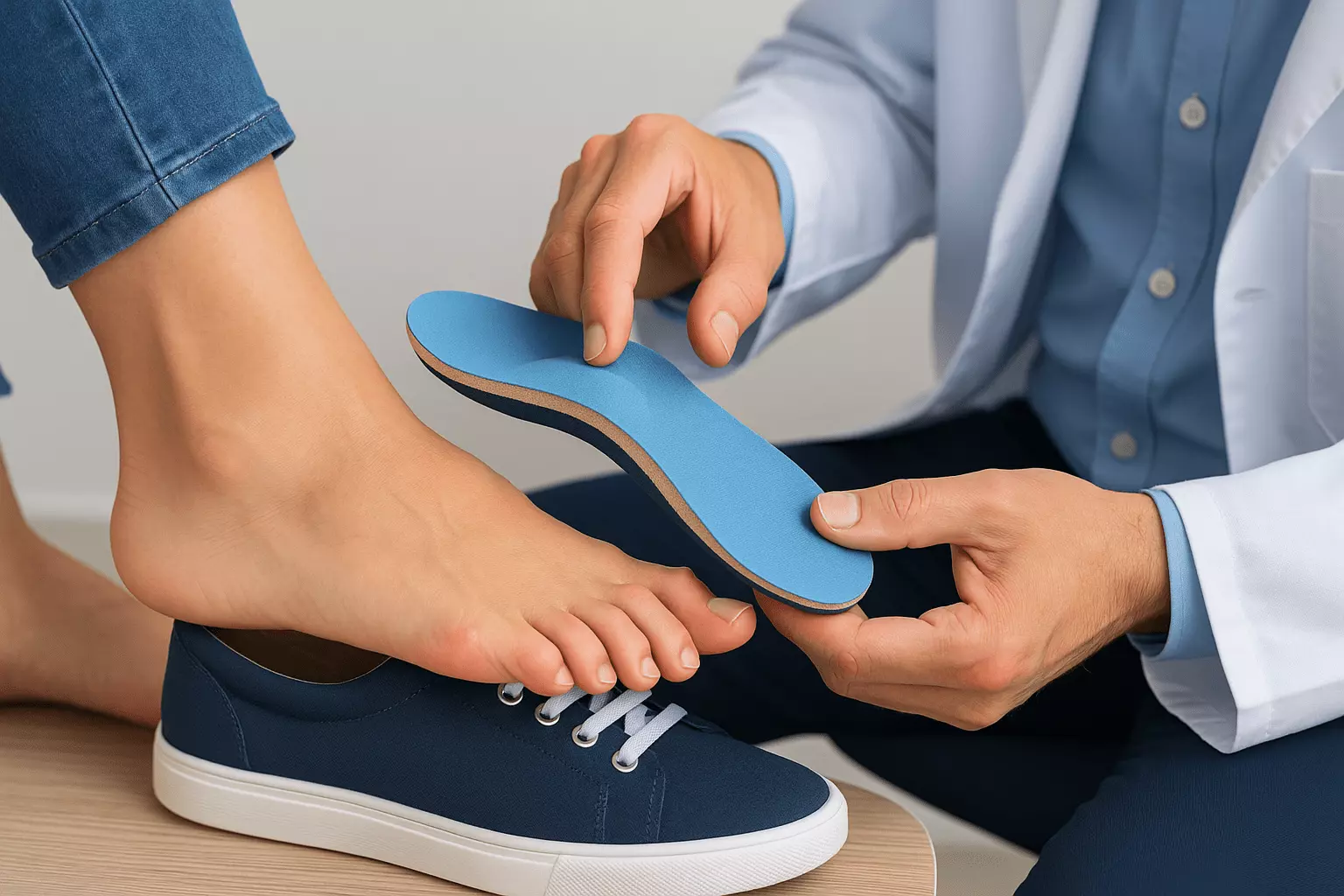
Orthotics are inserts placed inside shoes that are designed to support or influence the mechanical function of the foot. These devices range from prefabricated, over-the-counter insoles to fully custom-made products prescribed and fitted by a foot specialist. Their purpose is to provide targeted support, redistribute pressure across the foot, or help guide foot movement during activity. Here’s more information on orthotic options:
Types of Feet
Selecting appropriate orthotics involves careful assessment of an individual’s foot structure, biomechanics, and lifestyle needs. Every person’s feet are unique, but certain structural characteristics can influence how they function and how weight is distributed. These variations are factors when determining which type of support may be needed.
Flat feet, or low arches, tend to roll inward in a motion called pronation. Feet with high arches are typically more rigid and may not absorb shock as effectively, leading the foot to potentially roll outward in a motion known as supination. Feet with neutral arches generally exhibit more balanced mechanics.
Other characteristics, like foot width, forefoot or rearfoot alignment, and differences in leg length, can also affect how forces are transmitted through the lower body. An individual’s specific gait pattern, or the way they walk, is another key element that contributes to their support needs. An orthotics specialist analyzes these factors before recommending custom or other orthotic options.
Types of Orthotics
A wide variety of orthotics is available, with each type constructed from different materials and intended for specific applications. Over-the-counter insoles are prefabricated and can include cushioned liners for shock absorption and basic arch supports for general comfort. Some of these may include heel cups to stabilize the heel or metatarsal pads to reduce pressure on the ball of the foot.
For more structured control, semi-rigid orthotics are often made from materials like carbon fiber blends, and these devices offer a balance of control and flexibility. Functional orthotics are firm devices that provide rigid control for movement support and pain reduction. Accommodative orthotics are crafted from soft, compressible materials like EVA foam to cushion and protect sensitive areas by redistributing pressure. Orthotics should fit inside a shoe without causing crowding or slipping.
Foot Conditions that May Need Orthotics
Orthotics may be recommended for a range of foot conditions to enhance comfort, support alignment, or manage how force is distributed. Some conditions may include:
- Plantar Fasciitis
- Flat Feet
- High Arches
- Metatarsalgia
- Bunion Pressure
An individual might experience persistent discomfort during daily walking, or they may notice recurring calluses or blisters in the same spots. Other signs you may need orthotics include uneven wear patterns on the soles of your shoes. Any sudden changes in foot comfort or shape, especially following an injury, should also be evaluated.
Schedule an Orthotics Appointment
During a consultation, a practitioner can assess your foot structure, gait, and specific needs to determine a course of action. To aid this assessment, bring several pairs of your most frequently worn shoes, including athletic and work footwear. Discuss your daily footwear to help your provider identify the most suitable orthotic type, material, and design for your circumstances.
- What Is the Difference Between an Orthopedist and an Orthopedic Surgeon?
- What Does an Orthopedic Traumatologist Do? Complete Guide
- What Is the Pathology of the Skin? A Complete Guide
- What Is Dermatology Practical and Conceptual? Everything You Need to Know
- How Can I Find Dermatologos Cerca de Mi Ubicación? Complete Guide