
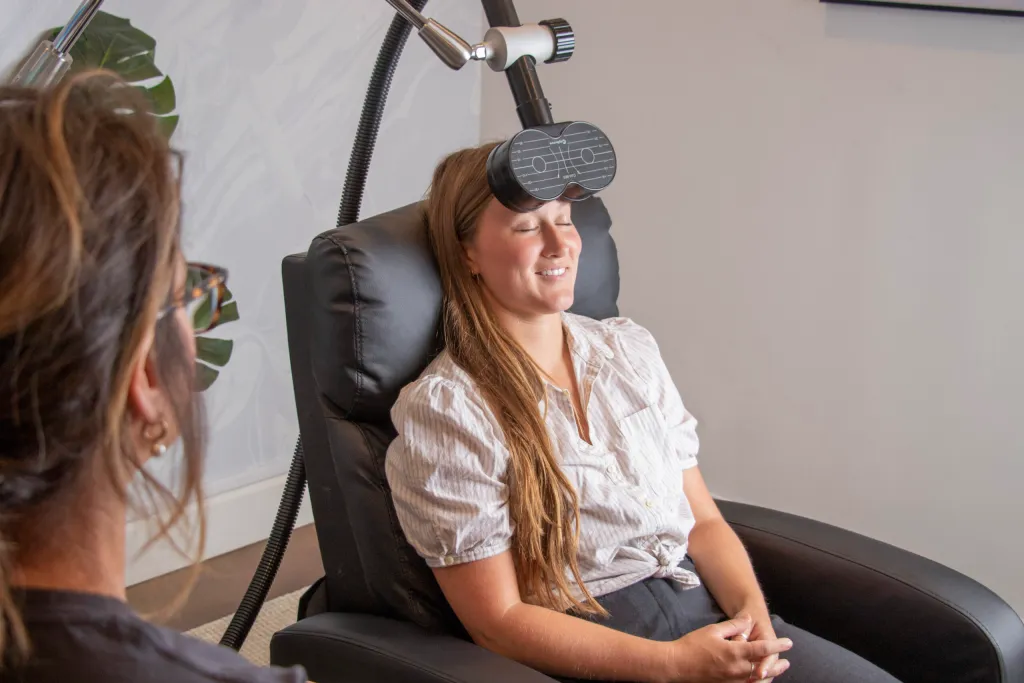
Depression causes ongoing sadness and loss of interest, affecting many aspects of daily life. People with depression may have trouble doing normal day-to-day activities and struggle with negative thoughts. Alternative approaches to treating depression include repetitive transcranial magnetic stimulation (rTMS). Here is more information about this treatment method:
Provides Non-invasive Approach
rTMS is a non-invasive procedure, and it uses magnetic fields to stimulate nerve cells in the brain to improve symptoms of depression. The treatment does not require surgery or the implantation of electrodes. Because it is non-invasive, patients remain awake and alert during the procedure. This approach contrasts with other treatments for depression that might involve more invasive methods.
Specialists perform the procedure in an outpatient setting, and patients can typically return to their daily activities immediately afterward. While the patient is seated in a comfortable chair, an electromagnetic coil is placed against their scalp near the forehead. The procedure involves the delivery of repetitive magnetic pulses.
Uses Magnetic Fields
The rTMS procedure uses magnetic fields to influence brain activity. These magnetic fields are similar in strength to those used in magnetic resonance imaging (MRI) machines, and they are focused on a specific region of the brain. The electromagnet painlessly delivers a magnetic pulse that stimulates nerve cells in the region of your brain involved in mood control and depression.
These magnetic pulses pass through the skull and induce small electrical currents in the targeted brain tissue. The process does not involve radiation, and it is a targeted therapy. Since the magnetic field is precise, it influences only a specific part of the brain.
This targeted application affects brain function locally, and it produces a specific, localized effect. The equipment generates these fields in a brief manner, indicating a quick and efficient process. Three key aspects of the magnetic field are:
- An ability to pass through bone
- A focused application on specific brain regions
- Generation in repetitive pulses
Stimulates Nerve Cells
The primary mechanism of rTMS involves the stimulation of nerve cells, which are also known as neurons. This stimulation is believed to trigger changes in how parts of the brain function, and these changes appear to have a lasting effect on brain activity. The electrical currents induced by the magnetic pulses excite neurons in the prefrontal cortex, an area associated with mood regulation.
Through repeated sessions, the treatment works to normalize activity levels in these key neural circuits. Neurons communicate via electrical and chemical signals, enabling complex brain functions. The external magnetic stimulation from rTMS influences this communication network, so it may help restore more typical patterns of brain function.
Improves Depression Symptoms
When depression symptoms improve with rTMS, the change is often linked to the reactivation of specific brain regions. The series of treatments appears to create long-term changes in brain function, although the exact mechanisms continue to remain an area of investigation. A typical course of treatment involves sessions several times a week for several weeks. Many people who undergo rTMS report a reduction in their depressive symptoms.
Get Treated for Depression
After a course of rTMS treatment, standard medical care for depression may be recommended as ongoing therapy. A healthcare provider can help determine the appropriate course of action for managing depression. For those who have not found relief from other depression treatments, rTMS presents another option to explore. If you are seeking treatment for depression, please reach out to a medical team to schedule an appointment.
- What Is the Difference Between an Orthopedist and an Orthopedic Surgeon?
- What Does an Orthopedic Traumatologist Do? Complete Guide
- What Is the Pathology of the Skin? A Complete Guide
- What Is Dermatology Practical and Conceptual? Everything You Need to Know
- How Can I Find Dermatologos Cerca de Mi Ubicación? Complete Guide