
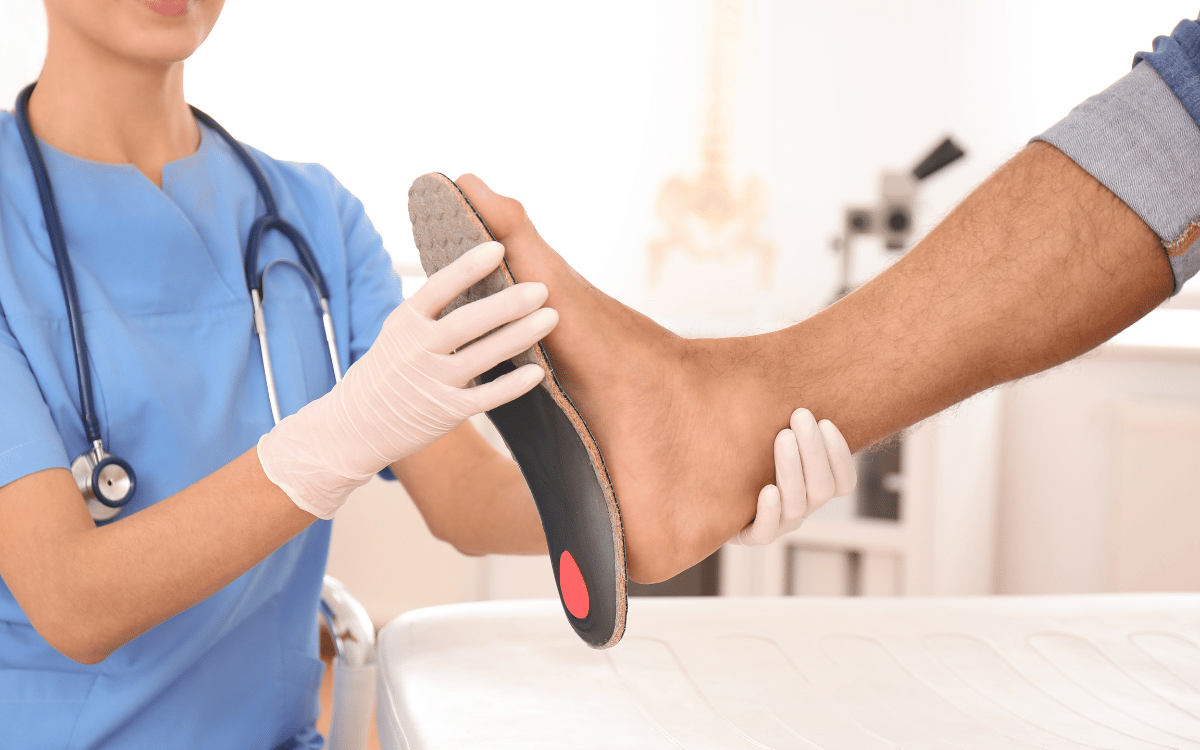
A podiatrist is a medical professional who treats disorders of the foot, ankle, and lower extremities. These specialists can diagnose and manage an array of conditions, from minor foot problems to complex injuries requiring surgical intervention. A part of their practice involves addressing biomechanical issues that can affect your overall comfort and mobility, often through custom orthotics. Here’s information on custom orthotics and how podiatrists create them:
What Are Custom Orthotics?
Custom orthotics are specially made medical devices that you wear inside your shoes to correct biomechanical foot issues. These devices are prescribed by a podiatrist to address your specific foot structure and pathology. They work by altering the alignment of your feet and ankles, which helps to support proper function and distribute pressure more evenly across your feet as you move.
Over-the-counter inserts are mass-produced and designed to fit a general foot shape, not your unique one. While these prefabricated options might provide some cushioning or support, they do not correct specific biomechanical problems. Custom orthotics are a more targeted tool for foot conditions, and they are crafted from a precise mold of your feet. There are two main types of custom orthotics:
- Functional Orthotics: Functional orthotics are constructed from semi-rigid materials such as plastic, carbon fiber, or graphite, and they help manage foot movement and alleviate pain.
- Accommodative Orthotics: Accommodative orthotics are made from flexible materials that adapt to your feet, offering cushioning and support. These are particularly beneficial for managing conditions such as diabetes-related foot ulcers.
Who Can Benefit From Them?
Individuals experiencing certain types of foot, ankle, or heel pain may benefit from custom orthotics, and they work well with other comprehensive treatments. People with specific foot deformities, such as high arches or flat feet, may also benefit from custom options. Athletes looking to optimize foot function or individuals who spend long hours on their feet can also be evaluated for custom orthotics.
How Are Custom Orthotics Made?
Creating a custom orthotic is a detailed process that involves a thorough evaluation and precise modeling technology. The goal is to produce a device that fits perfectly and provides the support your body needs. Your provider will create custom prescription orthotics tailored to the shape and contours of your feet. These orthotics align with the natural movement of your feet and ankles for optimal functionality.
Getting Evaluated
The process starts with a comprehensive examination by a podiatrist. This evaluation includes a review of your medical history and a discussion of any symptoms you are experiencing. The podiatrist will then perform a physical assessment of your feet and lower limbs, observing your foot structure, muscle strength, and range of motion. They will also conduct a gait analysis to determine the specific support you need.
Creating a 3D Foot Model
After a thorough evaluation, the podiatrist will create a precise, 3D model of your feet. This was traditionally done using plaster casting, but many podiatrists now use advanced digital scanning technology. A 3D scanner captures the exact contours of your feet, creating a detailed digital impression. This model is then sent to a specialized laboratory, where technicians use it to fabricate your custom orthotics from the materials selected by your podiatrist.
How Podiatrists Can Help
If you are experiencing persistent foot discomfort, contact a podiatrist for a consultation. A specialist can assess to find the cause of your condition and determine the right course of action. Find out if custom orthotics are right for you, and schedule an appointment today.
- What Is the Difference Between an Orthopedist and an Orthopedic Surgeon?
- What Does an Orthopedic Traumatologist Do? Complete Guide
- What Is the Pathology of the Skin? A Complete Guide
- What Is Dermatology Practical and Conceptual? Everything You Need to Know
- How Can I Find Dermatologos Cerca de Mi Ubicación? Complete Guide