
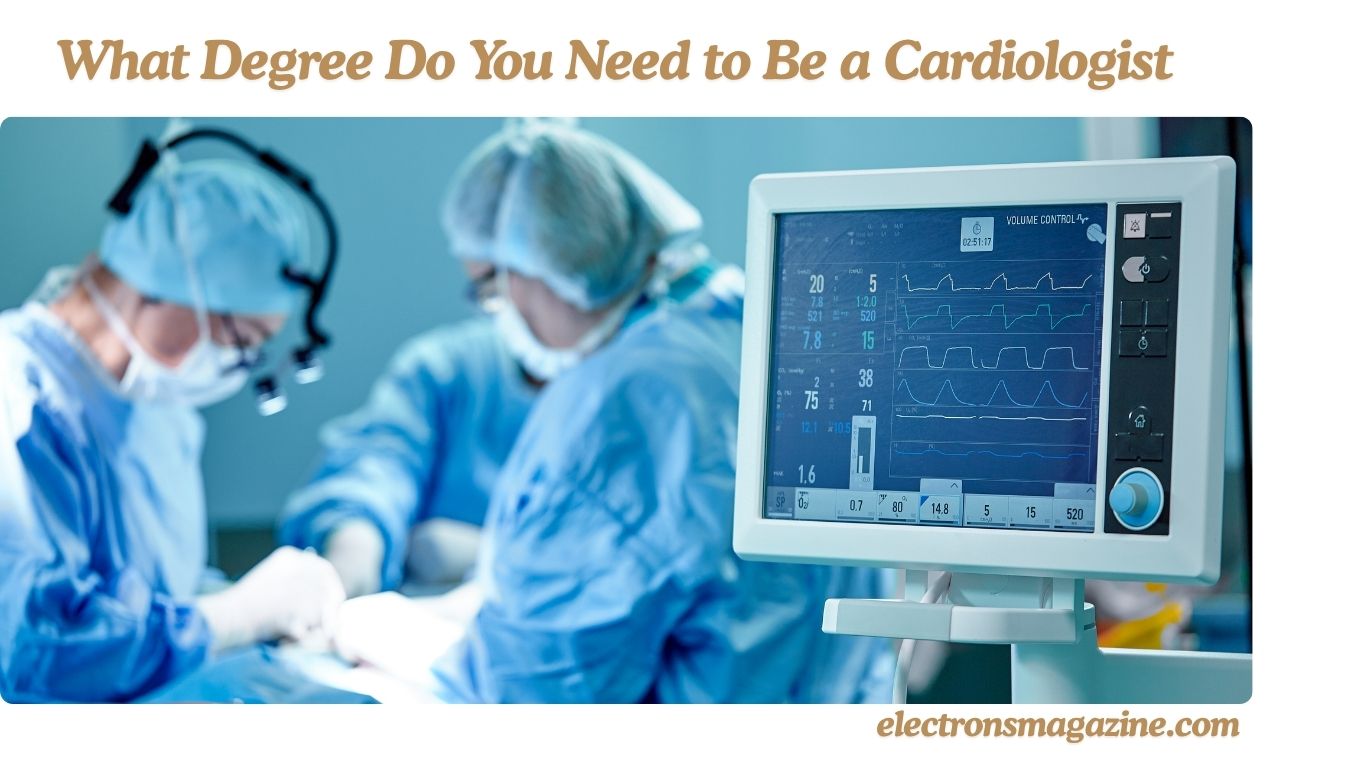
If you are asking, “What degree do you need to be a cardiologist?” the short answer is that you need a medical degree, either an MD or DO, followed by several years of specialized medical training. However, becoming a cardiologist involves much more than earning a medical degree.
In the United States, the usual path includes completing a four-year undergraduate degree, attending medical school for about four years, completing an internal medicine residency, and then completing a cardiovascular disease fellowship. The standard cardiovascular disease fellowship requires 36 months of training under current American Board of Internal Medicine requirements.
This means that after high school, becoming an adult cardiologist generally takes around 14 years of education and postgraduate training, although the exact timeline can be longer depending on the student’s path, specialty interests, research years, or additional subspecialty training.
This guide explains the degrees, exams, residency, fellowship, licensing, and other requirements involved in becoming a cardiologist in the United States.
What Degree Do You Need to Be a Cardiologist?
To become a cardiologist in the United States, you ultimately need a medical degree, either a Doctor of Medicine (MD) or a Doctor of Osteopathic Medicine (DO).
However, you do not enter cardiology directly after earning an undergraduate degree. Cardiology is a medical subspecialty, so you first have to become a physician and complete training in internal medicine.
The basic education path is:
- Four-year undergraduate degree
- Medical school leading to an MD or DO
- Internal medicine residency
- Cardiovascular disease fellowship
- Board certification and state medical licensure
- Additional fellowship training if you choose a cardiology subspecialty
The American Board of Internal Medicine (ABIM) currently requires cardiology trainees to first be certified in internal medicine before becoming eligible for cardiovascular disease certification. It also requires completion of the appropriate accredited cardiovascular disease fellowship.
So, when someone asks what degree a cardiologist needs, the most important answer is: an MD or DO, plus the required postgraduate training.
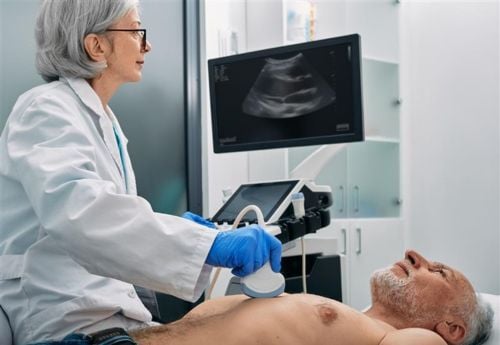
Source: UMHS
Do You Need a Bachelor’s Degree to Become a Cardiologist?
Yes. In the traditional U.S. pathway, students normally complete a four-year college degree before entering medical school.
The exact bachelor’s degree does not have to be called “pre-med.” A student can major in biology, chemistry, physics, psychology, English, or another field, provided they complete the coursework required by the medical schools they want to attend.
The Association of American Medical Colleges (AAMC) explains that medical schools require completion of a four-year degree from an accredited institution, but individual schools can have different prerequisite and recommended coursework requirements.
Common premedical courses include:
- Biology
- General chemistry
- Organic chemistry
- Physics
- Biochemistry
- English or writing
- Psychology
- Sociology
Not every medical school uses exactly the same requirements. Some schools have moved toward competency-based admissions rather than requiring the same fixed list of undergraduate courses. Therefore, students should check the requirements of each medical school they are considering.
The important point is that there is no single “cardiology bachelor’s degree.” The undergraduate degree prepares you for medical school.
What Should You Major in Before Medical School?
There is no single best major for future cardiologists.
Also Read:What Do Cardiologists Study? Heart Disease, Tests, and Treatments
A student interested in cardiology might major in:
- Biology
- Biochemistry
- Chemistry
- Neuroscience
- Physiology
- Health sciences
- Psychology
- Public health
- Another academic field
A science major can make some medical school prerequisites easier to fit into your schedule, but it is not mandatory simply because you want to become a cardiologist.
For example, someone could major in English and still pursue medicine if they complete the required science courses and meet the admission standards of the medical schools they apply to.
A useful strategy is to choose a subject that you genuinely enjoy and in which you can perform well. Medical school admissions are not based only on having a biology degree.
The AAMC notes that medical schools consider a broad range of factors, including academic preparation, experiences, interests, and personal competencies.
Do You Need an MD or a DO to Become a Cardiologist?
You can become a cardiologist with either an MD or a DO.
An MD is a Doctor of Medicine degree, while a DO is a Doctor of Osteopathic Medicine degree. Both are medical degrees that can lead to physician licensure and postgraduate specialty training in the United States.
After medical school, graduates enter residency training. A physician who earns a DO can pursue internal medicine residency and then cardiovascular fellowship just as an MD graduate can.
The important issue is not simply whether the medical degree says MD or DO. Future cardiologists need to complete the appropriate medical education, residency, fellowship, licensing, and certification requirements.
This is an important distinction because an undergraduate degree alone does not make someone a physician or cardiologist.
How Long Does It Take to Become a Cardiologist?
For the traditional U.S. pathway, becoming an adult cardiologist usually takes about 13 years after high school.
A simplified timeline looks like this:
| Stage | Typical Length |
| Bachelor’s degree | 4 years |
| Medical school | 4 years |
| Internal medicine residency | 3 years |
| Cardiovascular disease fellowship | 3 years |
| Total after high school | About 14 years |
There is an important distinction here.
Four years of college + four years of medical school + three years of internal medicine residency + three years of cardiology fellowship equals about 14 years after high school.
However, some descriptions of the pathway may use different terminology or count educational stages differently. Additional research years, dual-degree programs, or subspecialty fellowships can make the journey longer.
ABIM currently lists 36 months as the minimum cardiovascular disease fellowship training requirement and 36 months for its internal medicine training requirement.
So if you are planning your career, it is safer to think in terms of roughly 14 years after high school for the standard path to adult cardiology.
What Is Medical School Like for a Future Cardiologist?
Medical school is where students develop the broad medical knowledge needed before specializing.
A traditional four-year medical school curriculum often has two broad phases.
The first part focuses heavily on basic and clinical sciences. Students learn about areas such as:
- Anatomy
- Physiology
- Biochemistry
- Pharmacology
- Pathology
- Microbiology
- Immunology
- Medical ethics
- Clinical reasoning
The later part generally includes clinical rotations and direct patient care experiences.
Students rotate through different areas of medicine, which may include internal medicine, surgery, pediatrics, psychiatry, obstetrics and gynecology, family medicine, and other specialties.
The AAMC explains that medical school curricula vary considerably. Some schools use traditional preclinical and clinical phases, while others introduce patient contact much earlier.
For a future cardiologist, medical school is not only about learning the heart.
You need a strong understanding of the entire human body because cardiovascular disease can affect, and be affected by, the kidneys, lungs, brain, endocrine system, blood vessels, and other organs.
Do You Need the MCAT to Become a Cardiologist?
The MCAT is normally part of the process of getting into medical school, rather than a cardiology-specific examination.
The Medical College Admission Test evaluates knowledge and skills related to the natural, behavioral, and social sciences as well as critical thinking and problem-solving. The AAMC states that all U.S. medical schools and many Canadian medical schools require MCAT scores for regular admission, although individual policies can differ.
The MCAT has four major sections:
- Biological and Biochemical Foundations of Living Systems
- Chemical and Physical Foundations of Biological Systems
- Psychological, Social, and Biological Foundations of Behavior
- Critical Analysis and Reasoning Skills
The exam is therefore relevant before medical school, not after someone has already become a cardiologist.
A strong MCAT score can be helpful in medical school admissions, but it is only one part of an application. Medical schools also consider academic performance, experiences, personal attributes, and other evidence of readiness for medicine.
What Residency Do You Need to Become a Cardiologist?
After medical school, the standard path to adult cardiology involves an internal medicine residency.
Internal medicine residency provides broad training in the diagnosis and treatment of adult medical conditions.
During residency, physicians care for patients with conditions involving many different organ systems. They develop skills in:
- Patient evaluation
- Diagnosis
- Medical decision-making
- Medication management
- Hospital medicine
- Emergency assessment
- Chronic disease management
- Communication with patients and families
- Coordination of care
ABIM’s current certification requirements list 36 months of internal medicine training.
Internal medicine residency is essential because cardiologists need more than specialized knowledge of the cardiovascular system.
For example, a patient with heart failure may also have kidney disease, diabetes, high blood pressure, lung disease, or other medical problems. A cardiologist needs to understand these relationships when developing a treatment plan.
What Is a Cardiology Fellowship?
After completing internal medicine residency, a physician can pursue cardiovascular disease fellowship.
This is the stage where the doctor receives focused training in cardiology.
The standard cardiovascular disease fellowship is three years. ABIM currently lists 36 months of required training, including at least 24 months of clinical training, along with required experience in important cardiovascular procedures and skills.
Cardiology fellows learn about conditions such as:
- Coronary artery disease
- Heart failure
- Heart attacks
- Arrhythmias
- Valvular heart disease
- Cardiomyopathies
- Hypertension
- Peripheral vascular disease
- Congenital heart conditions
- Pericardial disease
Training also involves cardiovascular diagnostic and procedural skills.
ABIM’s current requirements include experience with areas such as electrocardiography, echocardiography, exercise testing, cardiac catheterization, diagnostic coronary angiography, and other cardiovascular procedures.
The exact day-to-day experience varies by fellowship program.
What Board Certification Does a Cardiologist Need?
Board certification is an important part of the professional pathway for many cardiologists.
For cardiovascular disease, ABIM requires applicants to already be certified in internal medicine, complete the required cardiovascular disease fellowship, demonstrate clinical competence, and pass the cardiovascular disease certification examination.
The certification process is separate from simply receiving a medical degree.
In other words:
Also Read:What Is a Heart Doctor Called? A Complete Guide to Cardiologists and Heart Care
Medical degree → physician training → internal medicine residency → cardiology fellowship → certification requirements.
ABIM also states that cardiovascular fellowship training must be completed through an appropriately accredited program, such as an ACGME-accredited program or qualifying Canadian program.
This distinction helps explain why asking only “What degree do you need to be a cardiologist?” does not fully describe the career pathway.
Do Cardiologists Need a Medical License?
Yes.
A medical degree does not automatically give someone unrestricted permission to practice medicine independently.
Physicians must meet the licensing requirements of the state where they practice.
Medical students also complete licensing examinations during their education and training. The AAMC explains that students begin the U.S. medical licensing process during medical school, including the United States Medical Licensing Examination pathway.
State medical boards determine the specific requirements for physician licensure.
Because licensing rules can change and can vary between states, students should always check the current requirements of the state in which they intend to practice.
What Is the Difference Between a Cardiologist and a Cardiac Surgeon?
This is one of the most common points of confusion.
A cardiologist is a physician who specializes in cardiovascular medicine.
A cardiac surgeon, by contrast, is a surgeon who performs operations involving the heart and related structures.
Their educational pathways are therefore different.
A cardiologist generally follows:
Bachelor’s degree → medical school → internal medicine residency → cardiovascular disease fellowship.
A cardiac surgeon follows a surgical training pathway, which can involve general surgery and specialized cardiothoracic surgery training.
Cardiologists can perform certain minimally invasive procedures depending on their specialty and training, but that does not make them cardiac surgeons.
For example, interventional cardiologists perform catheter-based procedures, while cardiac surgeons perform operations such as coronary artery bypass surgery.
Understanding this difference is important when researching medical careers.
Can You Become a Cardiologist With a Biology Degree?
A biology degree can be a useful undergraduate degree for someone planning to become a cardiologist.
However, a biology degree alone does not qualify someone to practice medicine.
The biology degree is the undergraduate stage.
After earning it, the student still needs to apply to medical school, complete an MD or DO program, complete internal medicine residency, and complete cardiovascular disease fellowship.
The same principle applies to chemistry, biochemistry, psychology, or other bachelor’s degrees.
Your undergraduate major helps prepare you for medical school. It is not the professional degree that makes you a cardiologist.
Is a Master’s Degree Required to Become a Cardiologist?
No.
A master’s degree is not normally required to become a cardiologist in the United States.
Some students choose to earn a master’s degree for academic, research, career, or medical school preparation reasons. Others may complete a postbaccalaureate program to strengthen their preparation for medical school.
The AAMC describes postbaccalaureate programs as programs that can support students transitioning from undergraduate education into professional school.
A master’s degree may therefore be useful for some students, but it is not a required step in the standard cardiology pathway.
Do Cardiologists Need a PhD?
No.
A PhD is not required to become a clinical cardiologist.
Some cardiologists do earn PhDs, especially those interested in biomedical research, academic medicine, laboratory science, or physician-scientist careers.
A physician might complete an MD/PhD program, for example.
However, a future cardiologist who wants to primarily diagnose and treat patients does not need a PhD.
The essential professional degree is the MD or DO, followed by the required postgraduate clinical training.
Can Cardiologists Get Additional Specialization?
Yes.
Cardiology is itself a specialty with several advanced areas.
After completing cardiovascular disease fellowship, some physicians receive additional fellowship training.
Examples include:
- Interventional cardiology
- Clinical cardiac electrophysiology
- Advanced heart failure and transplant cardiology
- Adult congenital heart disease
- Other focused cardiovascular training areas
Additional training can add one or more years to the overall pathway.
For example, ABIM’s current requirements for advanced heart failure and transplant cardiology involve an additional 12 months of training after the required cardiovascular disease fellowship.
Clinical cardiac electrophysiology also requires additional specialized training beyond the standard cardiovascular disease fellowship. ABIM currently describes additional one- or two-year training pathways depending on the circumstances and requirements.
The American College of Cardiology also describes cardiovascular fellowship as a three-year period involving clinical care, procedural experience, research, scholarly activities, and preparation for board examinations.
This means that some cardiologists spend significantly longer than the standard pathway in postgraduate training.
What Is the Best Degree Path for a Future Cardiologist?
There is no single perfect degree plan for every future cardiologist.
A practical pathway is:
High School
Build a strong foundation in:
- Biology
- Chemistry
- Physics
- Mathematics
- Writing
- Communication
Also look for opportunities to develop study skills, teamwork, service, and leadership.
College
Earn a four-year bachelor’s degree.
Complete the science and other prerequisite courses required by your target medical schools.
Maintain strong academic performance and develop meaningful experiences in health care, service, research, or related areas.
Medical School
Earn an MD or DO.
Also Read:What Does a Cardiovascular Doctor Do? Complete Guide to Cardiology Care
Develop broad clinical knowledge and experience across multiple medical specialties.
Explore cardiology through clinical rotations, research, mentorship, and specialty organizations.
Internal Medicine Residency
Complete the required internal medicine residency.
Develop a strong foundation in adult medicine and prepare for cardiology fellowship.
Cardiology Fellowship
Complete the required cardiovascular disease fellowship.
Develop advanced knowledge and clinical skills in cardiovascular medicine.
Certification and Practice
Meet board certification requirements, obtain the appropriate state medical license, and maintain professional competence throughout your career.
This is a much more useful way to think about becoming a cardiologist than focusing on one specific college major.
Frequently Asked Questions About Becoming a Cardiologist
1. Can I become a cardiologist without going to medical school?
No. To become a physician cardiologist in the United States, you need to complete medical education and the required postgraduate training. A bachelor’s, master’s, or PhD alone does not qualify someone to practice as a cardiologist.
2. Can a nurse become a cardiologist?
A nurse can pursue advanced cardiovascular nursing careers, but becoming a physician cardiologist requires a different educational pathway. A person would need to complete the requirements for medical school, earn an MD or DO, complete internal medicine residency, and complete cardiovascular fellowship.
3. Can you become a cardiologist with a DO degree?
Yes. A DO graduate can pursue internal medicine residency and cardiovascular disease fellowship. The standard physician training pathway is available to both MD and DO graduates.
4. Is cardiology harder than internal medicine?
Cardiology requires additional specialization after internal medicine residency, so it involves a longer training pathway. Whether it is “harder” is subjective. The specialty requires strong medical knowledge, clinical judgment, procedural skills for certain career paths, and a willingness to continue learning.
5. Can a cardiologist work in research instead of seeing patients?
Yes. Cardiologists can pursue careers that combine clinical medicine with research, education, administration, or other professional activities. Some physicians spend substantial parts of their careers in academic medicine and cardiovascular research, although the required clinical training still applies to those entering cardiology through the physician pathway.
Conclusion: What Degree Do You Need to Be a Cardiologist?
So, what degree do you need to be a cardiologist?
In the United States, you ultimately need a medical degree, either an MD or DO. But the medical degree is only one part of the process.
The typical pathway starts with a four-year bachelor’s degree, followed by medical school. After earning an MD or DO, you generally complete three years of internal medicine residency and then three years of cardiovascular disease fellowship. ABIM currently requires 36 months of cardiovascular disease fellowship training for cardiovascular disease certification.
Some cardiologists then complete additional fellowship training in areas such as interventional cardiology, electrophysiology, or advanced heart failure and transplant cardiology.
The most important thing for students to understand is that there is no single undergraduate “cardiology degree.” Your bachelor’s major can vary. What matters is completing the necessary medical school prerequisites, gaining admission to medical school, earning a medical degree, and completing the required clinical training.
If cardiology is your goal, start by building a strong academic foundation, gaining meaningful exposure to medicine, finding good mentors, and learning about the requirements of the medical schools and residency programs you may eventually target. Because admissions, licensing, and certification requirements can change, always verify current requirements with the relevant medical school, state medical board, ACGME-accredited training program, and ABIM before making major educational decisions.